How to Find and Work with Beta Readers: Everything Fiction Writers Need to Know
There comes a point in working on a novel when you’ve done everything you know how to do.
You’ve revised. You’ve edited. You’ve read the damn thing so many times you can practically recite whole sections from memory.
And that’s exactly the problem. You’re too close to see what’s working and what isn’t, or to make impactful changes.
Enter the beta reader.
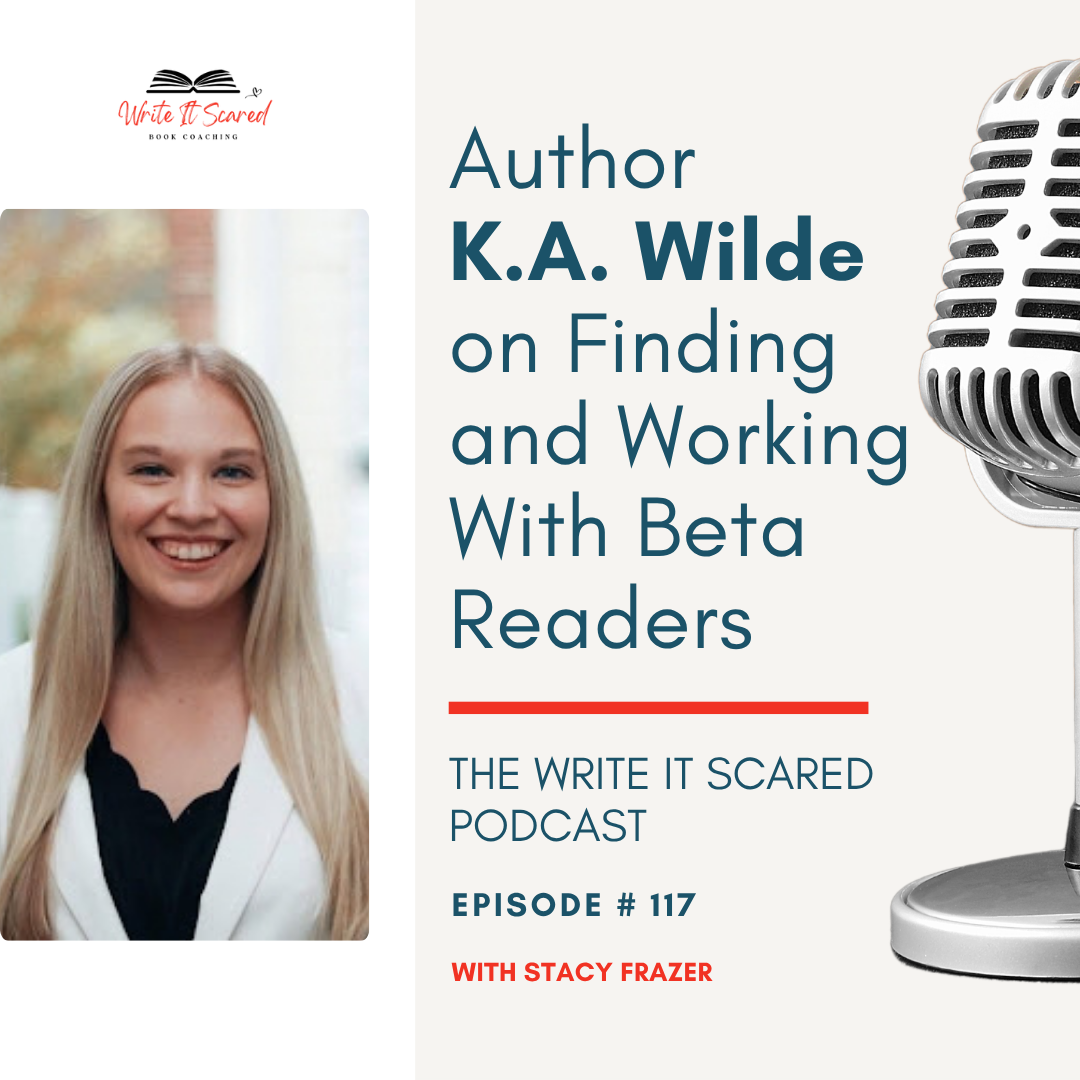
This week on the Write It Scared podcast, I sat down with mystery and thriller author and professional beta reader K.A. Wilde to talk about what beta readers actually do, when to use them, how to find the right ones, what to ask them, and perhaps most importantly, how to sort through their feedback without feeling like you have to change your entire freaking book.
What is a Beta Reader?
Beta readers are people who read and enjoy the genre you write. They can be writers or just readers, but often they’re both. You incorporate them at the end of revision, when the draft is as good as you can make it. Not perfect, but not riddled with errors either.
The major structural work should be done. The plot should make sense. And you want to clean up the grammar and spelling issues so they don’t distract your readers from what you’re actually trying to learn:
What is the experience of reading this book?
You want a beta reader to share how they experienced your book, what worked, what didn’t, where they got confused, and when they felt disengaged and uninterested.
I like to think of beta reading as a test run. You’ve built the product. You know there are probably still bugs hiding in there because you’re the author, and you cannot help but be biased. Now you need people who can experience the story without all the information living inside your head.
That’s what makes beta readers different from critique partners or alpha readers. Alpha readers generally come in much earlier while the story is still taking shape. Critique partners are often fellow writers who exchange pages and give more craft-focused feedback throughout the process.
Beta readers primarily respond as readers to a finished book.
Your Beta Reader Isn’t Going to Fix the Problem
One of the biggest misconceptions K.A. sees in writers is expecting beta readers to provide solutions. Expecting them to be editors.
That’s not really their job.
A beta reader might tell you they got bored in chapter twelve. They stopped trusting a character after this event, or they didn’t understand why your protagonist made a particular choice. Or, if you’re writing mystery or suspense, maybe they figured out your killer waaaay earlier than you wanted them to.
Sometimes they’ll know why they reacted a certain way. Sometimes they won’t.
Both are useful.
A reader’s job is to tell you about their experience of the story. Your job as the writer is to diagnose what created that experience and decide whether something needs to change.
This is also why K.A. and I both like having a mix of writers and non-writers among our beta readers. Writers tend to read more analytically and may be able to identify the structure or craft problem underneath their reaction. A regular reader might simply say, "I don't know why, but this didn’t make sense to me," or "I stopped reading here."
Finding the Right Beta Readers Matters
When I first started using beta readers, my criteria were basically:
Will you read my book? Yes? Great. Here ya go!
And I’ve learned some hard lessons that way.
Someone who doesn't regularly read your genre may give you perfectly thoughtful feedback that is completely wrong for the kind of book you're trying to write.
If you write a slow-burn psychological suspense novel and give it to someone who exclusively reads cozy mysteries, their expectations around pacing, violence, tone, character likability, and endings may be very different from those of your intended reader.
That doesn't make their opinion wrong. It just may not be particularly useful to this book.
K.A. recommends looking for people who regularly read your genre, will actually finish the manuscript, and are willing to give you honest feedback instead of simply telling you everything is wonderful. You can find those people through writing groups, critique communities, social media, paid beta-reading services, or your existing network.
And yes, friends and family can sometimes be useful too. Just know what you’re asking them for.
I recently handed my manuscript to my mother-in-law, knowing full well she was probably going to tell me she loved it, while pointing out all of my typos!
And you know what? Sometimes I need that reader too.
We need to know what’s working just as much as we need to know what’s broken.
Do You Need to Pay a Beta Reader?
Not necessarily.
Both K.A. and I have used a combination of free and paid readers. Free beta readers can come from writing communities, reader networks, critique groups, social media, or relationships you’ve developed with other writers.
Paid beta readers can be especially helpful when you need a very specific kind of reader and don’t have that person in your existing network. I've personally paid for beta and sensitivity reading when I was writing male/male romance and needed perspectives I couldn't access within my immediate writing circle. It was money well spent.
If you do pay someone, though, do your homework. Look at their experience and recommendations. Make sure they actually read your genre. If they offer sample reports, check those out too, and make sure you understand exactly what kind of feedback you're paying for.
Verify first. Trust after.
How Many Beta Readers Do You Need?
More isn't necessarily better.
K.A. generally aims for around three to six beta readers. I tend to land around three to five. Twelve different people giving you twelve different opinions about your novel sounds like a great way to lose your damn mind.
You can also stagger your readers. K.A. has done two rounds of beta reading, making changes based on the first round and then sending the revised manuscript to fresh readers to see whether those changes solved the problems. I've done the same thing.
Fresh readers are especially useful if you write mystery, thriller, or suspense because once somebody knows the twist, they cannot unknow it. Even if you substantially rewrite your twist or reveal, you need someone who doesn't already know where the bodies are buried to tell you whether it works.
Ask Better Questions, Get Better Feedback
My approach to beta questions has changed dramatically as I've grown as a writer.
In the beginning, I basically handed people my book and said, Tell me what you think.
Not particularly helpful.
Now I'm far more intentional. I still want to know whether they enjoyed the story, but I also ask about the things I’m specifically concerned about.
Were you invested in the protagonist?
Was anything confusing?
Where did you want to put the book down?
Did the POV voices feel distinct?
Did the ending satisfy you?
For mystery and suspense, you can ask when they figured out the twist, which clues they noticed, whether the red herrings worked, and whether the final reveal felt surprising but earned.
K.A. also suggested asking readers what other books your manuscript reminds them of. I love this question because their answers may help you identify comparable titles and understand where readers naturally position your story in the market.
The point isn't to hand your beta readers a forty-seven-question homework assignment. It's to figure out what information you need to make this particular book stronger.
You Do Not Have to Take All the Feedback
I'm going to say this again because it's important:
You do not have to take all the feedback.
When K.A. receives beta feedback, she reads it and then puts it away for a couple of days.
I wholeheartedly endorse this strategy, especially when the feedback makes you want to crawl under your desk—because sometimes it will.
Let yourself have the emotional reaction before you start changing things. Then come back and look for patterns.
If three readers independently stumble over the same scene, pay attention. If several people don't understand a character's motivation, pay attention. If one person thinks your protagonists absolutely should have gotten married and you never intended them to?
That may simply be personal preference.
Feedback is data. It isn't a mandate.
Your beta readers can tell you where their experience of the story broke down. They don't get to decide what story you ultimately tell.
Sharing Your Work Is a Skill, Too
This may be the most important part.
Giving your manuscript to beta readers is vulnerable. Sometimes it feels like exposing your jugular.
You've spent months or years making this thing. You care about it. And now you're deliberately handing it to people and asking them to tell you where it doesn't work.
Of course that's scary.
K.A.'s advice for writers who aren't ready to fling an entire manuscript at a group of strangers is simple: start smaller. Give a chapter to someone you trust. Join a writing group where you share a thousand words at a time. Practice receiving feedback in manageable doses.
Because sharing gets easier with practice.
It may never become completely comfortable. Every book has a way of humbling you.
But learning how to share your work, receive feedback, and still trust yourself is part of learning how to be a writer.
Parting Shot
Beta readers give you access to something you fundamentally cannot have on your own: the experience of encountering your story for the first time.
So get your manuscript as strong as you currently know how to make it. Choose readers who understand what you're trying to accomplish with your genre. Ask questions that give you information you can actually use.
Then hit send.
You might need to lie on the floor for a while afterward. That's fine.
When the feedback comes back, feel your feelings. Then look at the feedback for the patterns as objectively as possible, take what strengthens the story you're trying to tell, and leave what doesn't.
Because beta reading isn't about handing your book over to someone else to fix.
It's about gathering the information you need to make your decisions about your story.
Connect with K.A. Wilde
K.A. Wilde writes mysteries and psychological thrillers and provides beta-reading services for writers in the mystery, thriller, and horror genres. She's currently working on her fourth novel, a locked-room mystery/thriller, while another manuscript makes its way through beta readers before she begins querying.
You can find her at kawildeauthor.com, on X at @kawildeauthor, and on Instagram at @k.a.wilde.