A 3-Day Book, a 30-Year Book, and the Emotional Truth of Writing with Susan Sloate
Every once in a while, I interview someone whose creative journey feels like both a permission slip and a roadmap—full of promise, detours, doubt, unexpected triumphs, and well-earned self-satisfaction.
My conversation with author Susan Sloate was exactly that.
Susan has written more than 25 books across genres, survived the ups and downs of a decades-long writing life, and in August 2025, released her newest novel, Scenes from a Song—a story inspired by a YouTube rabbit hole, a Paul McCartney performance and the way music can connect us to our past, present, or future.
It’s also a story about how a single song can become the emotional spine of an entire life.
But what stood out most in our conversation wasn’t just her craft or her career—it was how honestly she talked about fear, doubt, procrastination, and the emotional landscape (or landmines) that every writer quietly wrestles with.
And she does it with remarkable humor and generosity.
Here are the lessons that stayed with me long after we stopped recording.
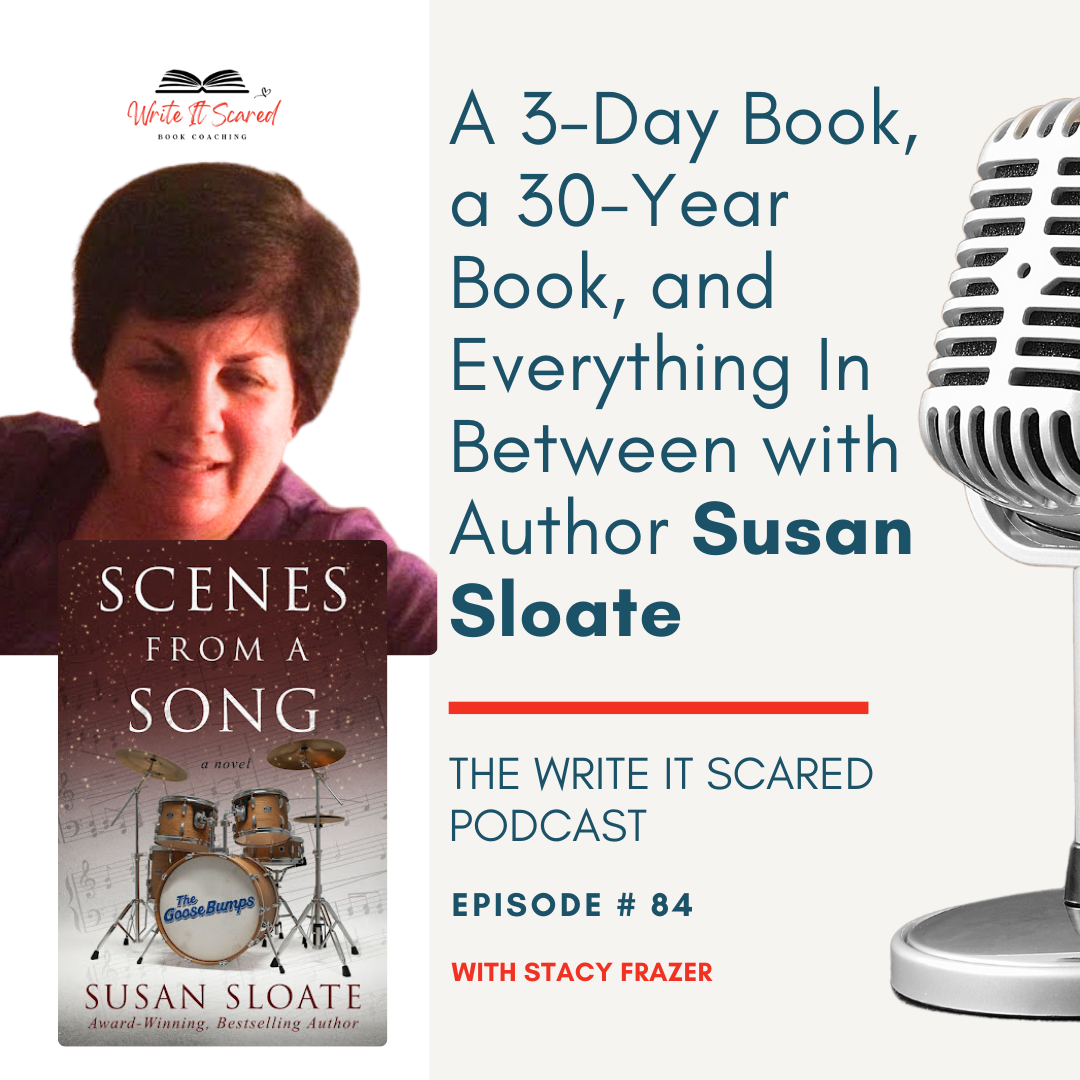
Writing: Making of Scenes from a Song
Susan’s newest novel, Scenes from a Song, was born from a YouTube rabbit hole and a Paul McCartney performance of “Please Please Me.”
What struck her wasn’t the music, but the audience: people singing, dancing, and—unexpectedly—crying.
Why? Because certain songs don’t just entertain us. They make us feel.
That moment sparked a story about a young musician named Jimmy, his grief after losing his father, and the song that becomes both his lifeline and his legacy.
The novel debuted as a #1 New Release in two Amazon categories within 18 hours. But the speed of its success isn’t the part that matters most. It’s the reminder that inspiration doesn’t need to be grand.
It just needs to move you.
The Three-Day Book: Panic as a Creative Catalyst
One of my favorite stories Susan shared was about a middle-grade book she wrote as a contract writer, in three days.
Not because she planned it that way. But because procrastination, fear, and a looming deadline backed her into a creative corner.
She didn’t know anything about the subject matter she was asked to write about and couldn’t figure out a way to connect with that character. Procrastination led to panic mode right before the deadline.
But Susan got scrappy and leaned into writing what she did know: her emotional intelligence based on her lived experience.
Since she didn’t know how to train a calf for a 4-H fair (the book’s central plot point), she let her protagonist be equally clueless. She turned the book in with minutes to spare and the publisher loved it.
This story is a gentle reminder:
Sometimes the only way out is through, and what helps is leaning into what you know emotionally. Write from that space.
The 30-Year Book: Some Stories Ripen on Their Own Timelines
On the opposite end of the spectrum is the book that followed Susan across decades.
She started writing it in her twenties during a confusing, deeply emotional chapter of her life. She wrote scenes out of order. She set it aside. Picked it back up. Set it aside again. Carried it from one computer to the next.
For thirty years.
Only when she reached a certain point in her life and gained new understanding about the relationship that inspired the story—was she able to finish it.
When she finally did, the book became a #2 Amazon bestseller.
This is the reminder writers need more than anything:
A slow book is not a failed book. Some stories need your lived experience. They need time. They’ll wait for you to become someone capable of telling the tale.
Imposter Syndrome Doesn’t Magically Disappear With Success
I asked Susan if, after all these years, she still struggles with doubt.
Her answer? Absolutely. To the point where she still has moments she believes she should pursue a different career entirely. And if an award-winning author with 25+ books, film options, and decades of experience still feels this way…
Then your doubt and imposter syndrome are not red flags. They’re just part of the writing life.
She put it perfectly:
“Stop worrying about what anybody thinks of you.... Just go solve the story problem.”
We don’t write because we’re certain. We'll never have a guarantee an idea will work. We just write because the damn story won’t leave us alone!
The Emotional State of a Writer Matters (More Than We Admit)
Susan said she gets her best ideas not when she’s terrified or stressed, but when she finds emotional neutrality—quiet, groundedness, space.
Trying to shame herself into productivity doesn’t work. Threatening herself doesn’t work. Bribing herself doesn’t work.
What works is:
Presence.
Permission.
Allowance.
And this simple truth:
You don’t need to feel fearless to write—just willing.
Why Her Story Matters for Your Writing Life
Susan’s journey—her 3-day miracle book, her 30-year labor of love, her newest music-hearted novel, her willingness to laugh at her own fear—proves something that as writers, we all need to hear:
There is no “right” timeline.
Panic doesn’t mean you’re failing.
Doubt doesn’t disqualify you.
You’re allowed to trust the story even when you don’t trust yourself.
And inspiration can come from the most unexpected places—including a Beatles song and a crying audience.
If a story won’t leave you alone, it’s yours for a reason. It’s already inside you. Just pick up your metaphorical pickaxe and get to mining for that creative gold.
To connect with Susan and explore her books Visit her online at https://susansloate.com.