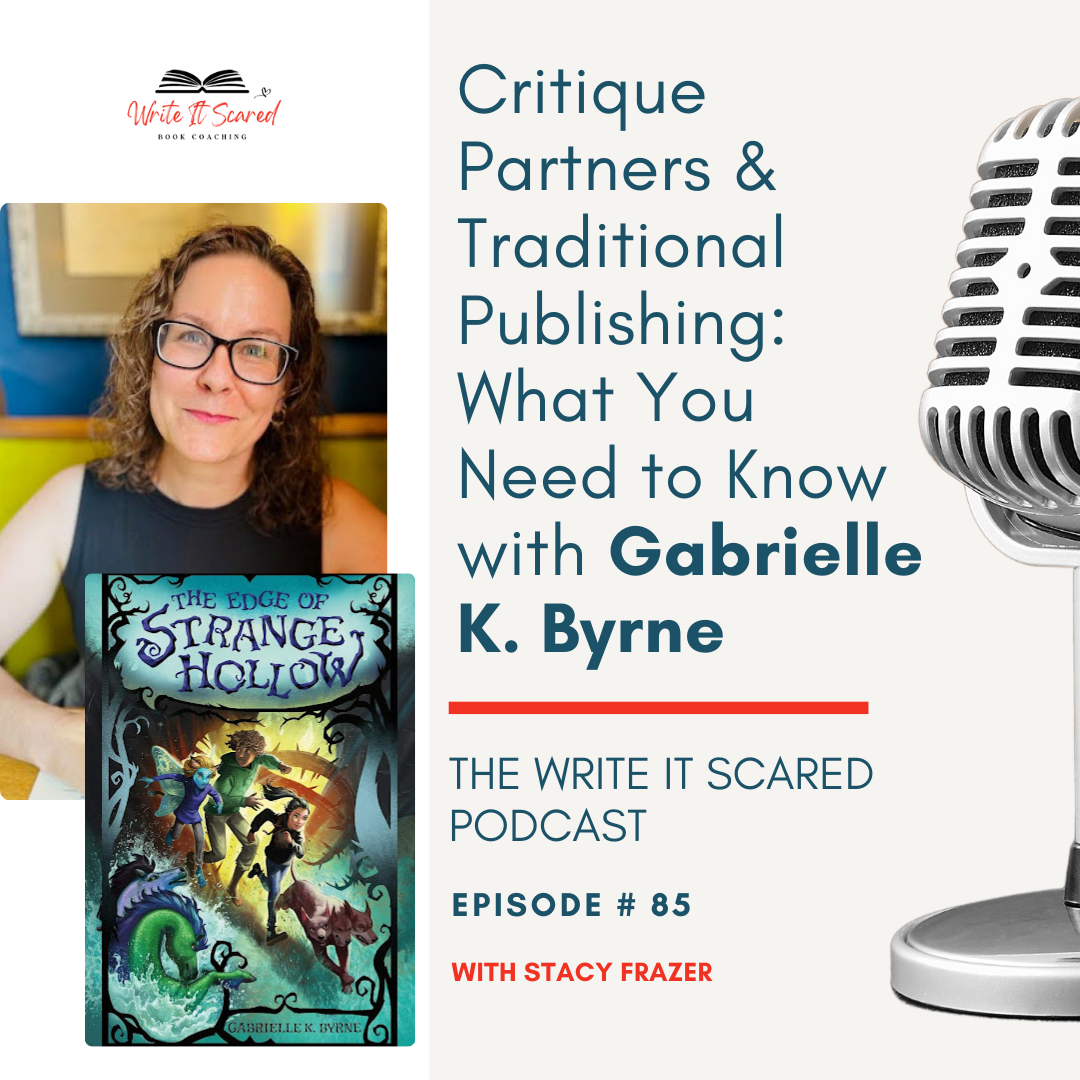
What Writers Need to Know About Critique Partners & Traditional Publishing: A Conversation with Gabrielle K. Byrne
Some conversations feel like a reset button. My chat with fantasy author and book coach Gabrielle K. Byrne was exactly that — a reminder that writing doesn’t have to be rushed, measured, or constantly proven. It can be something gentler and more human.
If you’ve been wrestling with feedback, comparing yourself to other writers, or wondering whether your process is “right,” this one’s for you.
Letting Stories (and Ourselves) Simmer
“Writing is like cooking. You have to let things simmer… Stories have to simmer. Characters have to simmer.”
As writers, we’re so often in a hurry: to revise faster, draft cleaner, or stay “on track.” But slowing down to let things simmer isn’t the same as stagnation.
Sometimes it’s actually part of the work.
Whether you’re developing a character arc or sitting with critique that stirred something uncomfortable, taking time ruminate is productive.
It’s grounding. And it allows your creative brain to do its best work.
A Writing Career That Unfolds, Not Explodes
Gabby’s path into publication wasn’t fast or furious. It was years of following curiosity, showing up for community, going to conferences, writing the next book, and then the next. No shortcuts, no straight lines.
And honestly? That’s how most writing lives actually look. Slow growth. Layered learning. Momentum that builds quietly until it doesn’t feel quiet anymore.
Evolving the Process
Gabby talked about how her process shifted over the years — from rigid plotting to a looser, more intuitive approach. She still uses outlines, but now more as support than as marching orders.
That evolution might ring true for a lot of us: the longer we do this, the more we discover that creativity needs structure and space.
Too much grip and story won’t play with you. Too little, and it wanders into the weeds or fades away.
Finding the balance is part of becoming the writer you’re meant to be.
Writing as a Lifestyle, Not a Performance
We also dug into the pressure writers feel to show progress, especially when people regularly ask, “How’s the book coming?”
But progress isn’t the only measure of a writing life. Writing is a practice that supports mental health, imagination, resilience, and curiosity. Creativity feeds us long before it becomes a finished product.
The more we focus on process over performance, the more sustainable and joyful our writing becomes.
Comparison, Community & Staying Grounded
Gabby was open about the fact that comparison still gets her sometimes, just like it does the rest of us.
Her way of interrupting it is to turn toward the writing community instead of away from it, by cheering other writers on, purchasing their books, and celebrating their wins.
It’s a powerful reminder: writing isn’t a scarcity game. We get stronger together.
Traditional Publishing: The Realistic Version
If you’re on the traditional path, Gabby shared truths that writers don’t always hear upfront:
Publishing is slow — truly, painfully slow.
You’ll revise more than you expect, often after you think you’re done.
You won’t have control over every decision.
The business side is real and not always soft.
But embedded inside that machine are people who genuinely care about stories and want to help them reach readers. It’s not glamorous, but it is full of heart.
The Three Ps
Gabby teaches a workshop built around three essentials for a long-term writing life:
Practice — staying curious, writing regularly, reading widely.
Persistence — the only way a book doesn’t get finished is if you stop.
Patience — with the story, the industry, and yourself.
And I’ll add the unofficial fourth that came through our conversation: Play. Joy really does make everything else possible.
Healthy Critique Partnerships
We spent a chunk of time talking about critique partners — how to find them and how to make the relationship a supportive one. The best critique partners:
Balance honesty with encouragement
Respect your process and boundaries
Care about improving the story, not controlling it
Help you grow without making you doubt your instincts
Feedback is meant to serve the story, not override your vision.
Gabby’s biggest tip? Give yourself space before responding or revising. Let your body settle. Let your brain catch up. And yep, let things simmer.
When Burnout Creeps In
A writing community doesn’t appear out of nowhere — you build it intentionally.
And when burnout hits, sometimes the most productive thing you can do is refill the creative well: read outside your genre, switch projects, or return to something that reminds you why you wanted to write in the first place.
If You Feel Behind
We closed our conversation with a message for writers who feel like they’re not catching up fast enough — or not “enough” in general.
You’re not behind. You’re not late. You’re not doing it wrong.
You are a creative person in the middle of making art, and the process of doing so counts. It matters. It feeds you just as much as it feeds your work.
Final Thoughts
Talking with Gabrielle was a beautiful reminder that writing isn’t only about producing pages. It’s about growing into your voice, trusting the slow parts, finding people who get it, and remembering you don’t have to do any of this alone.
To connect with Garbielle and explore her books, visit her online at https://www.gkbyrnebooks.com/