Writing with ADHD: Practical Strategies to Finish Your Novel - A Conversation with Nicole Bross
As writers, we get a lot of advice on how we’re “supposed” to do this writing thing.
We read craft books that say to write every day at the same time, write 2000 words in a session, finish one thing before you start something else, and on and on.
And when the regular craft and accountability advice don’t work for us, it’s easy to wonder if there’s something wrong. Not with the advice, but with us.
We can start to think—I’m lazy, undisciplined, or just not cut out for this, when none of that is true, especially if you’re a neurodivergent writer.
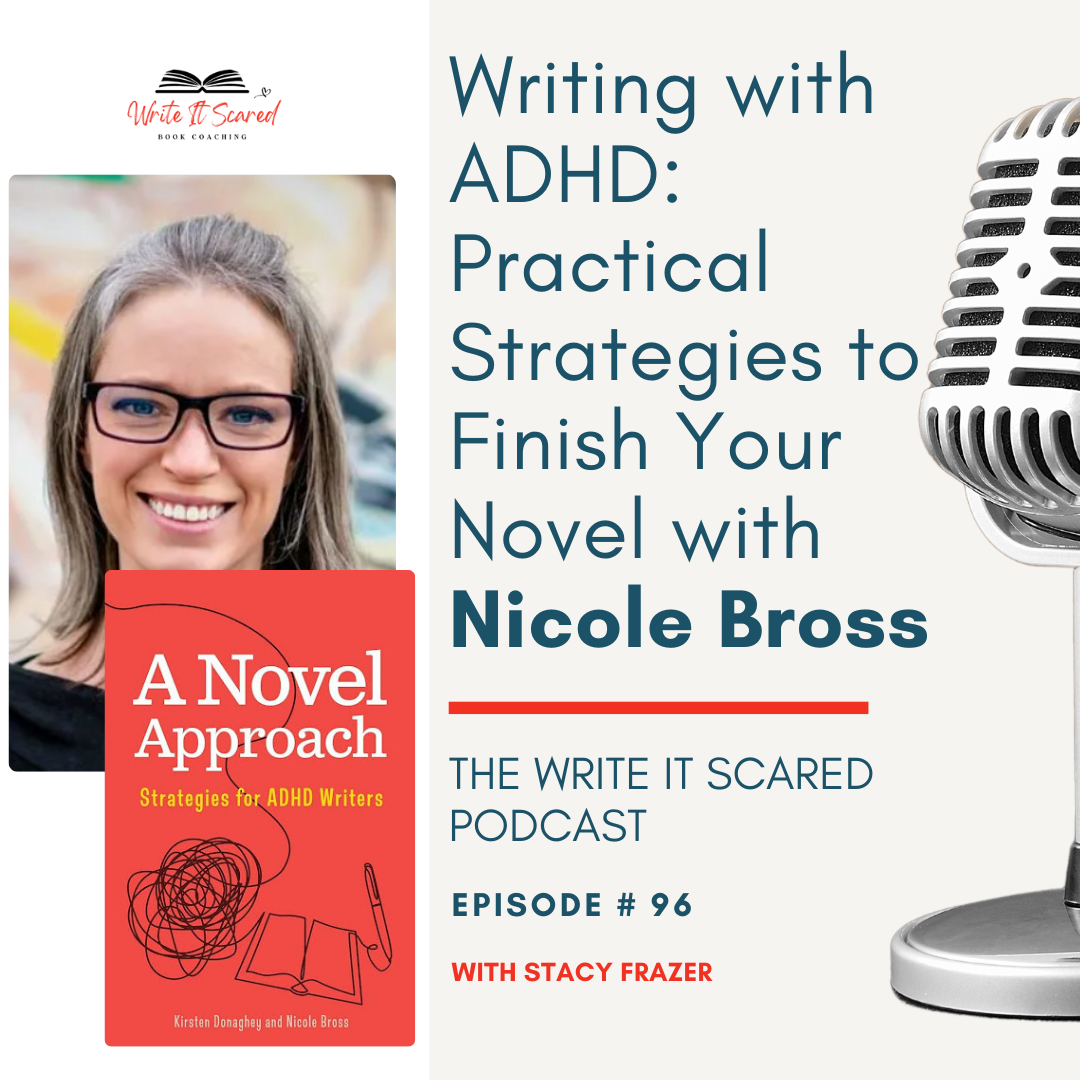
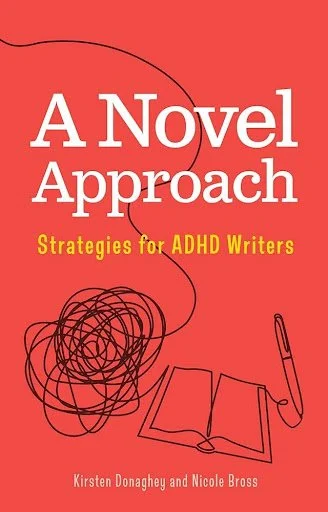
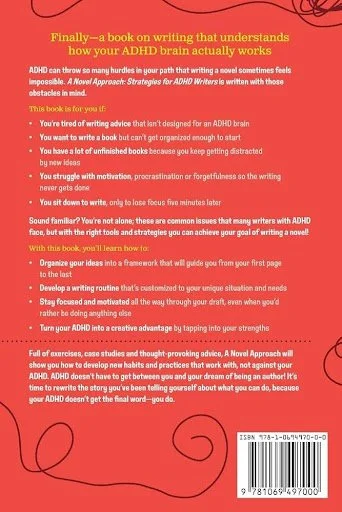
This week on the podcast, I chatted with author, editor, and book coach Nicole Bross, co-author of The Novel Approach: Strategies for ADHD Writers, to talk about what’s really happening beneath that struggle.
What she shared came from personal experience and was both practical and deeply compassionate.
“I Thought I Was a Bad Writer.”
Nicole was diagnosed with ADHD as an adult, after one of her children was diagnosed, and she’d recognized herself in the symptom assessment.
Before that diagnosis, writing felt five times harder than it seemed for her peers.
She struggled with:
Consistency
Organization
Motivation
Finishing projects
She compared herself constantly to writers who seemed to produce multiple books while she was still revising one.
And without understanding the neurological component behind her challenges, she internalized her slower progress as a lack of ability and intelligence. She thought she wasn’t committed enough or good enough to make it as a writer.
The diagnosis didn’t instantly solve everything. But it did something powerful:
It shifted her from self-criticism to curiosity and more compassion.
The Mindset Shift That Changed Everything
Nicole described the biggest change this way: She stopped assuming she was a bad person.
Not just a bad writer or undisciplined.
That’s how deep self-judgment can run when you don’t understand what’s happening in your brain.
Once she began approaching herself with compassion instead of contempt, everything began to shift.
Instead of asking, “What’s wrong with me?”
She began asking, “What works for my brain?”
That question, coupled with observations and a search for patterns of what worked, changed not only the writing game but also the life game for her.
Why Traditional Writing Advice Doesn’t Always Work
General craft advice is typically written by and for neurotypical brains, so if that’s not you, then things like:
Morning pages
Write every day at the same time
Produce X number of words or pages daily
Sit still and focus for hours
Won’t work well.
For many ADHD writers, those prescriptions can feel damn near impossible.
But that doesn’t mean you’re not cut out for writing. It means you may need different tools.
Motivation Isn’t Just Motivation
One of the most helpful parts of our conversation was unpacking why writers with ADHD tend to lose motivation.
Because “I’m not motivated” is usually not the whole story.
It might be:
Boredom
Shiny new idea syndrome
Overwhelm
Fear
Perfectionism
Decision fatigue
The end of the honeymoon phase
Nicole emphasized that finishing books is often the hardest part for ADHD writers, not starting them.
And that’s where structure and tools become essential.
Why Outlines Are a Keystone Tool For ADHD Writers
I know. Many of us are resistant to outlining. At one time, I was, too. I didn’t want anything infringing on my creativity. But I’ve learned that it doesn’t need to be so black-and-white, and Nicole agrees.
So I don’t think of outlining as figuring out the whole story first. I think about creating specific milestones to target. A way to break down the book into bites.
I still find a lot of story as I write, but outlining helps me direct my thoughts and energy.
For ADHD writers, especially, outlining has several benefits:
1. It breaks a massive project into manageable pieces.
You don’t need to write the “whole” book. You just need to write the next scene or paragraph.
2. It reduces decision fatigue.
It saves you from having to constantly ask what happens next. Instead, you’ve got a roadmap based on your character's goals.
3. It clarifies the ending.
You have an end destination in mind based on the type of story and experience you want to give to your reader. The finish line is visible.
And don’t forget, outlines are flexible.
Nothing is set in stone. Outlines will evolve and shift as the book progresses and you learn more about your story and characters.
Nicole’s outlines can be 10,000 words long. Yours might be bullet points on a napkin or somewhere in between (me). It all counts.
The point isn’t rigidity or limiting options, or “getting it right.” The point is to use the outline as a tool to reduce cognitive overload.
Procrastination vs. Paralysis
For writers with ADHD, what seems like procrastination is actually paralysis based on an inability to decide what to tackle first.
Writing a novel requires juggling multiple “departments” in your brain:
Idea generation
Research
Plot structure
Character development
Drafting
Editing
Emotional processing
That’s a lot.
If you’re stuck, it’s not about being lazy. It’s about feeling so overwhelmed that you can't take action.
And overwhelm needs simplification, hence the outline process :)
The Creative Advantage
Having ADHD might come with challenges, but there are benefits too, especially for writers. Neurodivergent folks are frequently more creative when it comes to problem-solving. They often entertain more possibilities, generate more ideas, and see alternative solutions where a neurotypical brain may struggle with variation once a pattern has been set.
Final Takeaways: Being a Writer with ADHD isn’t a Character Flaw
Struggling to write consistently does not mean you lack discipline. Feeling easily distracted doesn’t mean you don’t care enough, and taking longer than your peers doesn’t mean you’re not good enough.
Sometimes it means your brain works differently. And different isn’t defective.
When we learn to shift our energy from self-judgment to curiosity and compassion, it can help us gain new perspectives that benefit our creative process.
Whether you have an ADHD diagnosis or you simply recognize yourself in parts of this conversation, the invitation is the same:
Build systems that support you.
Break big projects into smaller pieces.
Use tools that reduce overwhelm.
And practice compassion when you stumble.
Writing a novel is already hard. We don’t need to make it harder by turning on ourselves.
Be curious. Be strategic. Be self-compassionate.
And above all—be kind to yourself and others.
Where to Connect with Nicole
You can learn more about Nicole and her work here:
🌐 Writing: https://nicolebross.com🌐 Book Coaching: https://manuscriptalchemy.com
The Novel Approach: Strategies for ADHD Writers is available wherever books are sold.