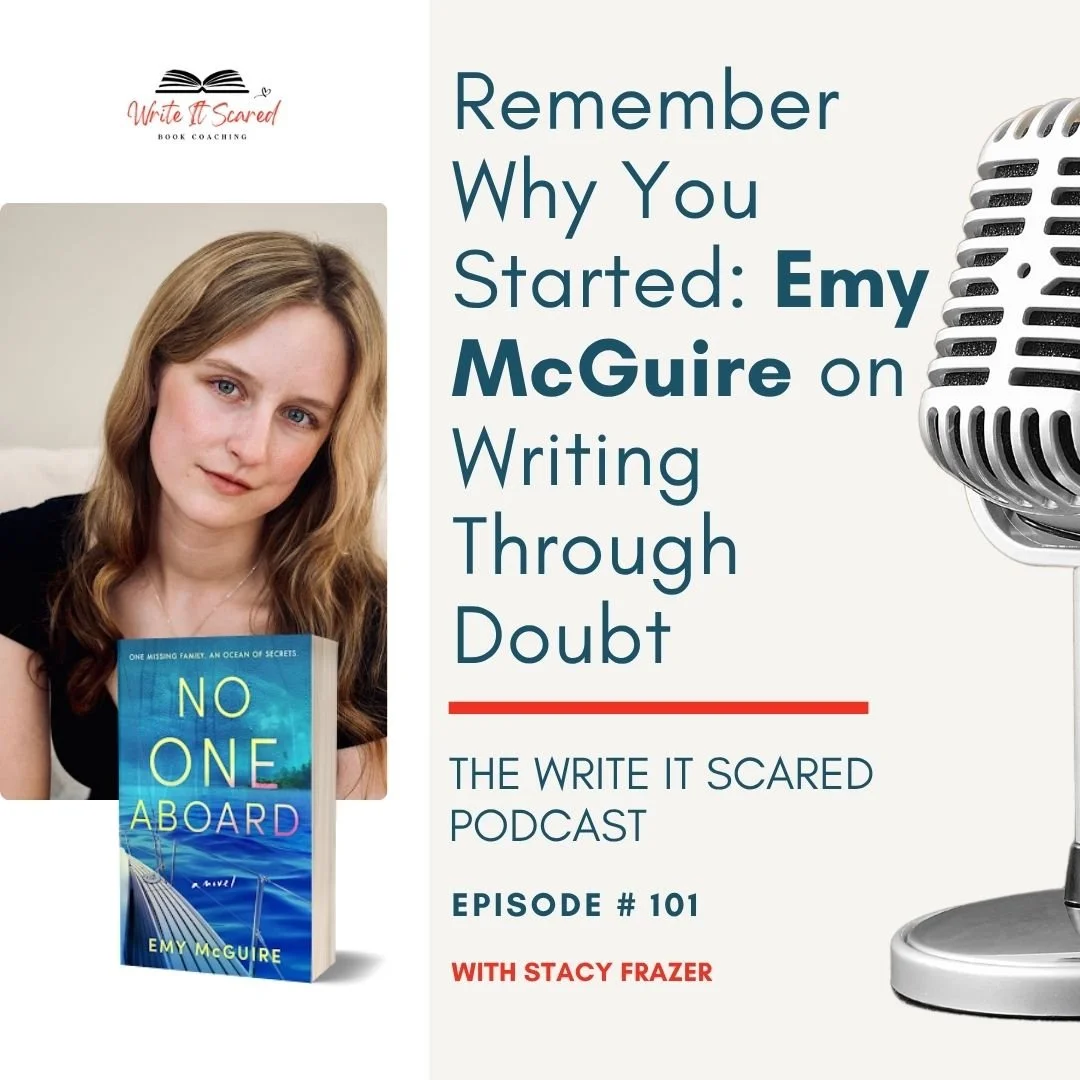
Remember Why You Started: Emy McGuire on Writing Through Doubt
It’s easy to look over at another writer’s success and assume that it was simple or was a straightforward journey, especially if said writer publishes at a young age—say in their 20s.
But when you zoom in, what you actually see is years of effort, rejection, false starts, burnout, and long stretches where nothing seems to move forward at all.
That's what makes Emy McGuire’s journey so inspiring. Not because she became a published author in her early twenties, but because of what it took for her to get there.
The Dream That Starts Early… and Comes With Pressure
Emy knew she wanted to be a published author when she was nine years old. Not in a vague, someday kind of way—but as in “this is the thing for me, no questions asked,” type of way. She took herself seriously from the start, and that decision shaped everything that followed.
But there’s a flip side (maybe dark side) to that kind of clarity.
When you know what you want that early, the pressure can build just as fast as the dream. Sometimes to the point the pressure wins. Emy shared that when she turned eighteen, she cried because she felt like a failure, not having achieved her publishing dream. She already felt like she was behind—at eighteen!
And that’s something I see all the time with writers, regardless of age. I’m guilty of this, too.
We set a vision and commit, but then we quietly start measuring ourselves against a timeline that may or may not have anything to do with reality.
The Books That Don’t Make It (And Why They Matter)
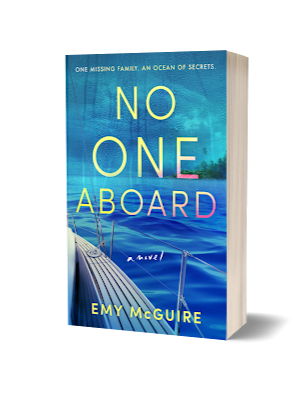
Before No One Aboard—her debut thriller—Emy wrote six full novels that never saw the light of day.
Six.
And that’s not failure. That’s practice.
By the time she sat down to write what would become her debut, she wasn’t asking, “Can I finish this?” She already knew she could. What she had built over time wasn’t just writing skills, it was patience and the ability to stay with a big all the way to the end.
That’s a huge shift for everyone who wants to write a novel.
Because for many of us, finishing is the hardest part. And it’s not solved by inspiration. Sorry. It’s solved by repetition and persistence (blood, sweat, sometimes tears.)
The Story That Changed Everything
The idea for No One Aboard came at a time when Emy had decided to put down her pen. She’d felt like she failed at writing, at being creative. She hadn’t produced anything her agent wanted to pitch for several years, and it left her feeling incredibly sad and defeated. So she did something crazy. Something unrelated. She decided to learn how to sail and study marine biology.
But her muse had other plans.
While Emy was sailing across the Atlantic, she became fascinated by ghost ships—real-life cases where entire crews vanish without explanation. Combine that with a dream about missing twins and the seed grew into an intriguing premise:
What if a wealthy, well-known American family with plenty of secrets set sail on a luxury boat… and disappeared? Seven people. No trace.
What makes the story compelling isn’t just the mystery. It’s the layering of tension through dual timelines and multiple points of view, allowing the reader to experience both the unfolding disappearance and its aftermath simultaneously.
But that structure didn’t come easily.
Learning Craft in Real Time
This was Emy’s first thriller, and with that came a new set of challenges, especially structure.
Mystery asks you to think not just about what happens, but how information is revealed. And when readers learn something matters just as much as what they learn.
And for a writer who doesn’t naturally outline, it’s tough.
Emy talked about having to work harder in revision because she didn’t fully map things out in the beginning. But she also discovered something that carried her through the drafting process:
She just wrote the most interesting thing that could happen next.
That instinct became her guide, helping her build momentum and keep the story alive on the page.
Burnout, Breakdown, and the Reset
At one point, Emy stopped writing for a few years. Not because she didn’t care, but because the weight of everything—the expectations, the rejection, the self-imposed pressure—became too much.
She stepped away and did something completely different. She went to sea. She studied marine biology. She removed herself from the creative space entirely. And ironically, that’s what brought her back, or maybe it never really left her in the first place.
Stepping away gave her room to breathe. It gave her new experiences, a new perspective, and ultimately, a new story.
So stepping away isn’t always quitting. Sometimes it’s actually recalibrating.
What to Do With Doubt (When It Shows Up Anyway)
Doubt doesn’t disappear as you become a better writer. We hear this all the time from our podcast guests. Nope. It just changes shape.
Emy’s approach to dealing with it is to just keep moving.
She described doubt as something that slows you down, like molasses—but can only truly stop you if you stop. No matter how slow, so long as you keep going, you’ll eventually move through it.
The Advice That Matters Most: Remember Why
At the end of our conversation, Emy shared something every writer needs to hear:
““You have to remember why you started writing… sometimes no one’s listening, but the story still mattered to you.””
Before the goals. Before the publishing dreams. Before the pressure. There was just you and the story.
And that version of writing—the quiet, private, deeply personal one—is the only thing that’s actually within your control.
So if you’re in a stint where the writing feels heavy and you're questioning your ability, just remember that the only thing you really need to keep going is to remember why you began in the first place.